
It can be difficult to find dyslexia schools for your child. Every parent worries about their child’s schooling to some degree, but parents of children who are dyslexic or neurodiverse may have a more difficult time than most. Seeing your child struggle in a school that doesn’t comprehend them or provide them with the necessary help is intolerable.
Finding dyslexia schools that genuinely understand dyslexia can be an overwhelming endeavor for many families. The speed and tactics used in traditional classrooms frequently don’t suit the learning styles of these intelligent and talented individuals. However, there are specialized independent schools all around the nation that embrace a variety of learning styles and rethink education from a new perspective.
These programs include multimodal, research-based teaching methods in all academic areas, going beyond just providing additional assistance. In addition to developing a solid foundation in arithmetic, reading, and writing, students also acquire critical skills for navigating their individual learning profiles.
The answer to the question of whether there are dyslexia schools created especially for kids with dyslexia and similar learning disabilities is definitely yes, and the correct fit can alter a student’s educational path and sense of self.
Table of Contents
What is Dyslexia?
Dyslexia is a learning disability that makes it difficult to read, write, and occasionally speak. This is because decoding—the process of recognizing speech sounds and connecting them to words—is difficult for people with dyslexia.
Students with dyslexia may have serious social and academic difficulties, which may prompt parents to look for alternative educational settings. Even top-tier dyslexia schools, though, could find it difficult to adequately assist dyslexic pupils.
It might be challenging to address any language-based learning gaps in larger classes since it takes patience, experience, and individualized attention. Additionally, academic-focused institutions may ignore the social effects of dyslexia.
People with dyslexia usually face the following challenges:
- Difficulty with phonemic manipulation and phonological awareness,
- Word recognition and decoding challenges that lead to sluggish and imprecise reading,
- Spelling and writing issues,
- Difficulties in comprehending and analyzing complicated texts,
Dyslexia can manifest in a variety of ways and vary in intensity from person to person. Furthermore, certain children might be particularly good at things like creativity, problem-solving, or visual-spatial skills.
The Significance of Dyslexia Schools and Learning Centers
For students with dyslexia, specialized dyslexia schools and learning centers provide individualized therapies and evidence-based instruction in a supportive setting.
These organizations offer:
- Personalized instruction: Tailored teaching methods and materials created to address the particular requirements of dyslexic pupils.
- Multisensory methods: Instructional strategies that enhance learning and retention by stimulating the visual, auditory, and kinesthetic senses.
- Programs for structured literacy: To develop strong reading skills, phonics, vocabulary, fluency, and comprehension are taught explicitly and methodically.
- Assistive technology: Instruments and programs that assist kids in overcoming challenges and work independently by supporting reading, writing, and organization.
- Psychologists and counselors can provide emotional support to increase resilience and self-assurance.
Students can build a solid academic foundation and acquire critical reading skills by attending specialist dyslexia schools and learning centers. These schools have the knowledge and tools necessary for addressing the particular difficulties dyslexic students have.
Important Things to Take Into Account While Choosing Dyslexia Schools
When selecting dyslexia schools for your child, it’s necessary to consider key factors that guarantee they receive high-quality instruction and appropriate support. Among other important variables, take into account the staff’s qualifications and the effectiveness of dyslexia programs.
Intervention Programs for Dyslexia
A school’s ability to provide accessible and successful dyslexia services ought to be a top concern. Look for dyslexia schools that use evidence-based strategies designed specifically for dyslexic students, focusing on language, reading, and writing difficulties to help them reach their full potential.
Related: List of Trade Schools in Michigan for Electricians
Personalized Support
For students with dyslexia, individualized help is crucial. Through one-on-one tutoring, small group sessions, and assistive technology, dyslexia schools should offer specialized support. The key to each student’s academic performance and emotional well-being is a dedication to comprehending their individual needs.
Competent and Skilled Staff
Choose a school that employs skilled, experienced teachers with specialized training in dyslexia education. Make sure there are experts on hand, such as occupational therapists and speech-language pathologists, who can provide specialized support to meet the special needs of dyslexic students.
Overall Evaluations
To identify each student’s strengths, weaknesses, and learning needs, dyslexia schools must conduct thorough tests. These could include social-emotional growth, reading, writing, and cognitive abilities. These assessments make it possible to develop individualized lesson plans and enable efficient progress monitoring.
A Helpful Learning Environment
For students with dyslexia, a supportive learning environment is crucial. Selecting dyslexia schools that support inclusivity and a feeling of community among dyslexic kids is important. These schools should also help students develop their strengths and self-esteem.
Collaborating with Parents
Selecting dyslexia schools that prioritize open communication and engaged parental participation is vital to get first hand and accurate information. Seek out chances for parent involvement, frequent progress reports, and a partnership mindset—all of which demonstrate a school’s dedication to appreciating parental feedback. Working together with parents guarantees that students receive complete assistance at home and at school.
Best Dyslexia Schools In The USA
Selecting an educational setting that provides the right kind of help is crucial if your child has dyslexia. Thankfully, there are specialized dyslexia schools in the US that focus on creating programs specifically for these kids. The following are 10 of the best dyslexia schools in the USA, noted for their specialized instruction and extensive support:
1. Landmark School:
Landmark School, a world-renowned pioneer in the field of language-based learning disabilities (LBLD), is situated in Beverly and Prides Crossing, Massachusetts. The daily one-on-one tutorial for each student is the focal point of Landmark’s highly structured, individualized instructional method, which serves day students in grades 2–12 and boarding students in grades 9–12. The carefully educated instructors provide a demanding college-prep curriculum that incorporates assistive technology and research-based methodologies in every subject, with an average class size of just seven pupils.
The objective is to increase students’ self-confidence so they can return to traditional classroom environments with success. Students participate in a variety of sports and visual/performing arts activities outside of the classroom. The cost of tuition for the 2025–2026 school year is roughly $70,305 for day students and $92,350 for boarding students.
2. The Lab School of Washington:
The Lab School of Washington, D.C., supports kids in grades 1-12 who have language-based learning challenges, such as dyslexia. The school is also known for its innovative and creative arts-based, multisensory curriculum, which makes academic subjects approachable and interesting by utilizing artistic mediums like dance, drama, and visual arts as teaching tools.
Students receive individualized attention and support in a nurturing environment on two campuses, one for elementary kids and the other for middle/high school students, with a student-teacher ratio of 4 to 1. With 83% of graduates continuing on to a four-year institution, the Lab School places a strong emphasis on the development of the whole child and preparing pupils for college and beyond. Tuition for the 2025–2026 academic year is roughly $63,075 for Lower School students and $64,375 for Upper School students.
3. The Gow School:
The Gow School, the country’s first college-prep boarding school for males with dyslexia and other language-based learning disabilities like dyscalculia and auditory processing disorder, is situated in South Wales, New York. Gow’s “Reconstructive Language” curriculum, an organized literacy program created in partnership with neurologist Dr. Samuel T. Orton, serves students in grades 6–12 and post-graduate levels.
Six days a week, students attend small classes with an average of five students. They also participate in a two-hour supervised evening study hall in addition to a daily 30-minute tutorial period. Students can participate in a wide range of sports and artistic endeavors while mastering phonics, vocabulary, spelling, and advanced linguistics with this rigorous, research-based program. For the 2025–2026 school year, day students will pay around $62,900 in tuition, while boarders will pay about $83,900.
4. Charles Armstrong School:
The prominent non-profit Charles Armstrong School in Belmont, California, serves kids with dyslexia and similar learning disabilities in grades 2–8. The school was founded in 1948 and uses a multimodal, visual, auditory, kinesthetic, and tactile teaching approach to help students develop the fundamentals of language.
The school prides itself on a student-teacher ratio of roughly 5:1, ensuring every child receives the targeted support they need to excel academically and grow in confidence. The program’s strong curriculum is complemented by a number of interscholastic sports and fine arts initiatives. The Lower School’s tuition for the 2025–2026 school year is about $59,750, while the Middle School’s is about $61,950.
Related: Best-Ranked Optometry Schools in Missouri
5. Eagle Hill School:
Eagle Hill School, which is situated in Hardwick, Massachusetts, offers day and boarding choices as well as a full educational experience for kids with a range of learning difficulties. The school offers a small, supportive environment that embraces learning variety for students in grades 8 through 12 as well as post-graduate levels.
The program’s main component is highly customized education in small class sizes that are tailored to each student’s unique learning profile and where they are. Eagle Hill has a strong emphasis on social-emotional development, executive function, and self-advocacy abilities outside of the classroom.
Strong athletic activities, artistic facilities, and a nurturing residential life program that promotes self-reliance and a strong sense of community are all characteristics of the campus that help students get ready for college and beyond.
6. The Vanguard School:
Located in Lake Wales, Florida, The Vanguard School specializes in offering an educational setting for students with a variety of learning disabilities, such as anxiety, ADHD, dyslexia, and dyscalculia. Students in grades 6 through 12 (as well as post-secondary programs) can advance at their own speed and concentrate on their strengths because of the school’s distinctive, highly customized “pathways” approach to teaching.
With small class sizes and individualized attention, Vanguard offers a disciplined, encouraging environment that helps children develop essential academic skills, social competence, and self-confidence. In addition to a range of extracurricular activities, athletics, and fine arts, the campus community provides boarding facilities, resulting in a well-rounded experience intended to prepare students for fulfilling jobs and post-secondary study.
7. Triad Academy at Summit School:
A specialist program for K–8 kids with dyslexia and other language-based learning disabilities is provided by Triad Academy, a branch of the prestigious Summit School in Winston-Salem, North Carolina. The Academy is well known for its dedication to the Orton-Gillingham (O-G) educational technique, which uses a multimodal, evidence-based approach in small class settings to guarantee mastery of spelling, reading, and writing.
Triad incorporates extensive support services and technology into the everyday curriculum. Being a member of the greater Summit School community gives students access to a range of resources, facilities, and extracurricular activities in addition to the focused, specialized training they need to overcome obstacles and succeed academically and socially.
8. The Windward School:
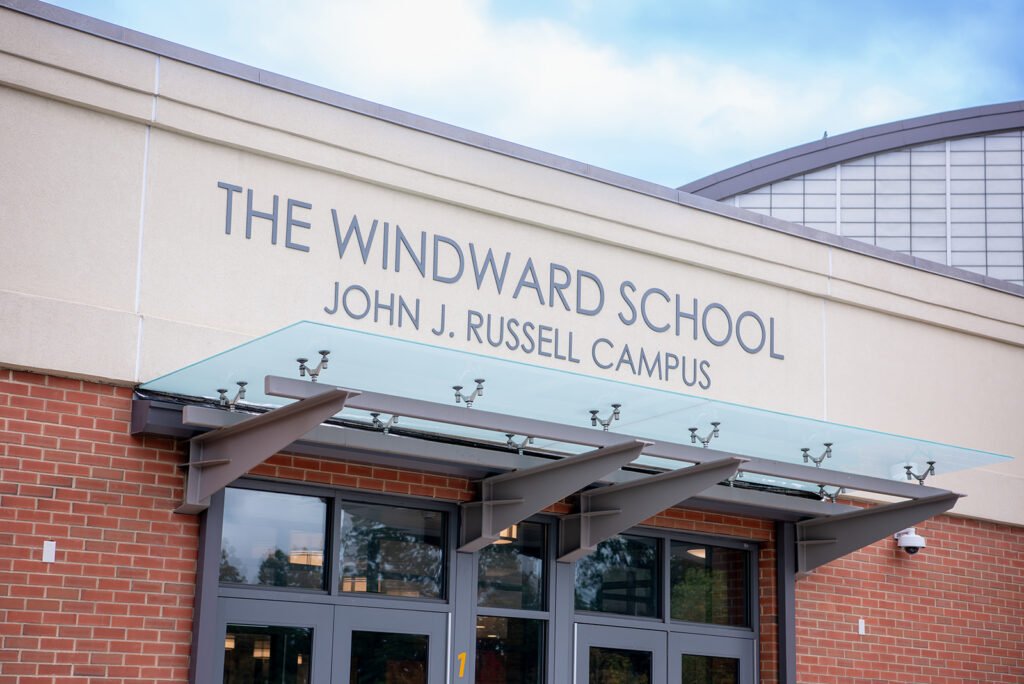
The Windward School, which has campuses in White Plains and New York City, is well-known across the country for its demanding, research-based curriculum created specifically for students with dyslexia and other language-based learning challenges. The school uses a highly structured, direct instructional methodology based on the Orton-Gillingham principles and operates on the idea of early intervention.
The curriculum is remedial and intense, intending to return students to regular classrooms after their language processing abilities have been successfully restored. Windward is a leader in best practices because of its strong commitment to teacher preparation and continuing scientific research in the field of LBLD. In small classes, students receive highly individualized attention with a strong emphasis on fundamental language skills.
9. Ascend School:
For K–8 students with language-based learning disabilities, including dyslexia, the Ascend School in California offers a supportive and academically demanding environment. The school’s philosophy is based on highly qualified teachers who provide small-group, individualized training based on each student’s unique learning profile. Ascend employs evidence-based, multimodal methods to create solid core abilities in arithmetic, reading, and writing.
The school places a strong emphasis on the development of critical thinking, executive function abilities, and social-emotional well-being in addition to fundamental academics. The intention is to empower kids, boost their self-esteem, and provide them with the tools they need to become lifelong learners who can succeed in a conventional academic setting.
10. Hill Top Preparatory School:
For kids in grades 5 through 12 with a variety of learning disabilities, including LBLD and attention problems like ADHD, Hill Top Preparatory School in Rosemont, Pennsylvania, provides a thorough, college-ready curriculum. Students who benefit from small class sizes, individualized attention, and faculty members with specialized training in learning methodologies are supported by the way the school is set up.
In addition to academics, Hill Top emphasizes the development of important executive function abilities, self-advocacy, and social confidence. The curriculum is meant to push students’ minds while giving them the tools they need to succeed academically and get ready to move on to higher education. To give students a well-rounded education, the school provides a variety of extracurricular activities, sports, and artistic programs.
FAQ’s
Which unique teaching techniques are employed by the best dyslexia schools?
In order to effectively target basic reading and language abilities, top dyslexia schools mostly employ structured literacy approaches like the Orton-Gillingham (O-G) method, which are multisensory, explicit, and evidence-based.
Are the top dyslexia schools in the US offering boarding options?
Indeed, many well-known educational institutions, such as the Landmark School and The Gow School, provide both day and residential (boarding) programs to serve families around the country.
What is the average cost of tuition at these specialist schools?
Top dyslexia schools have high tuition, which can range from about $50,000 to more than $90,000 annually, depending on whether the student attends a day or boarding school.
Do these schools offer emotional assistance in addition to intellectual instruction?
In order to develop confidence and self-advocacy skills, these institutions integrate strong academic remediation with essential emotional, social, and executive function support.
Is it possible for my child to return to a regular school?
Giving kids the tools they need to successfully return to regular classrooms when they’re ready is the ultimate goal of many specialized programs.
Conclusion
Selecting the best learning environment requires careful evaluation of teaching strategies and specialist assistance. The best dyslexia schools place a high priority on multimodal, evidence-based instruction to develop fundamental abilities. The first important step is to find dyslexia schools that meet your child’s unique needs. These professional dyslexia schools enable students to overcome obstacles and achieve long-term academic success.